MÆTER Select 003
House of Reflected Colour
An interior organised by a vertical void, reflected colour and the depth of history.
Colour becomes architecture
Colour becomes architectural when it changes the way space is perceived.
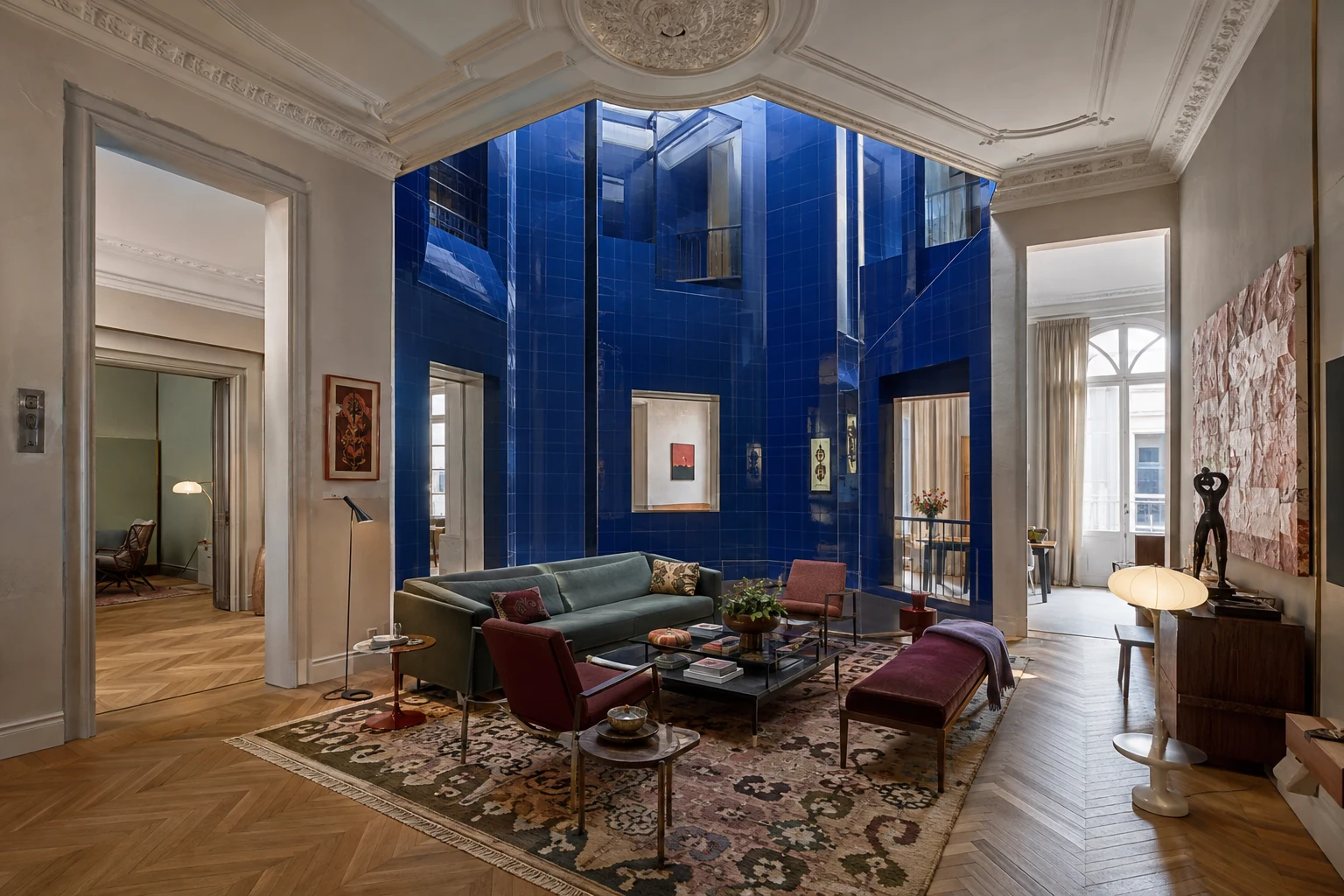
The apartment's late-nineteenth-century rooms are neither treated as a period set nor cleared into neutrality. Ornamental ceilings, mouldings, tall openings and parquet are restored as an active spatial framework.
Through this sequence, a faceted cobalt court rises vertically. It gathers daylight from above, redistributes colour and gives the rooms a new point of orientation.
History is not a backdrop. The intervention gives it a new spatial order.
02
Threshold
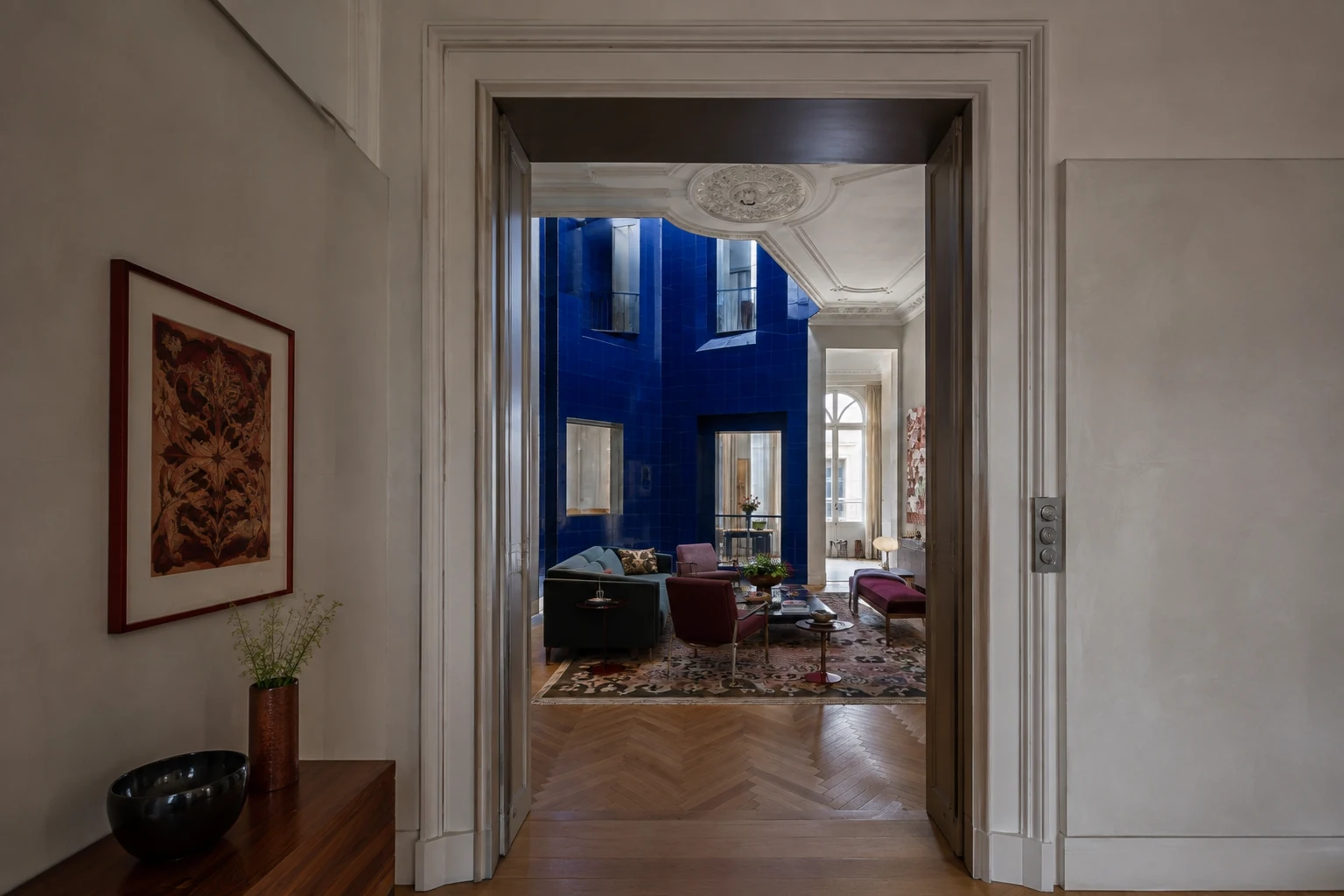
The court is encountered in fragments.
From one room cobalt appears as a surface; from another, as reflection or a depth glimpsed through an opening. Its full geometry becomes legible only through movement.
The historical sequence of rooms remains, but orientation is no longer carried by doorways alone. Colour marks position, direction and distance.
The void is understood before it is entered.
03
The Living Room
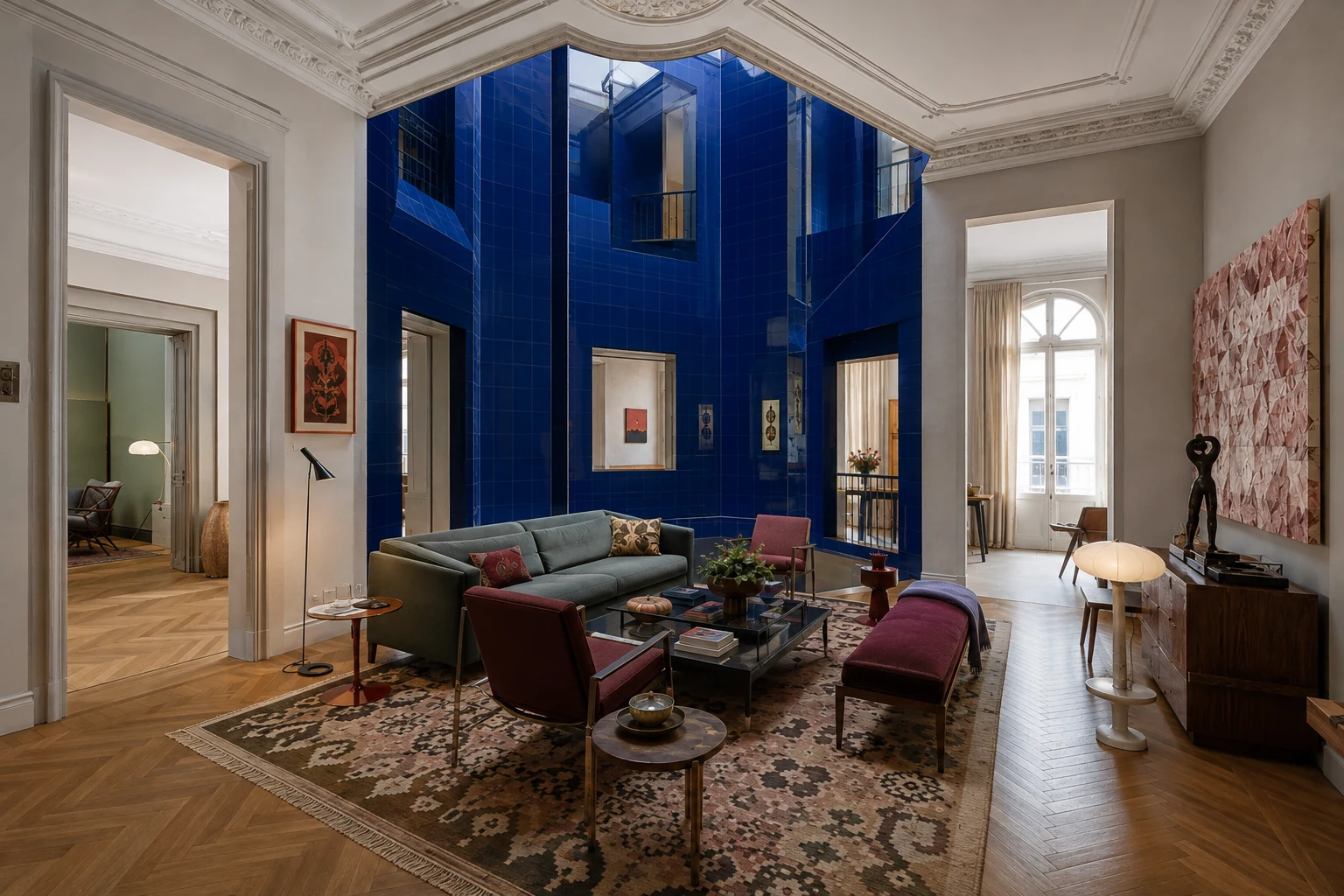
The living room is composed as part of the architecture rather than placed inside it.
Restored parquet and a historical rug establish the ground. Grey-green upholstery, walnut, burgundy and plum bring different periods into the same field.
Art, furniture, lighting and objects are not made uniform. Their coherence comes from proportion, placement and the way each element receives light. The room is collected through judgement rather than accumulated through time.
04
Light / Time
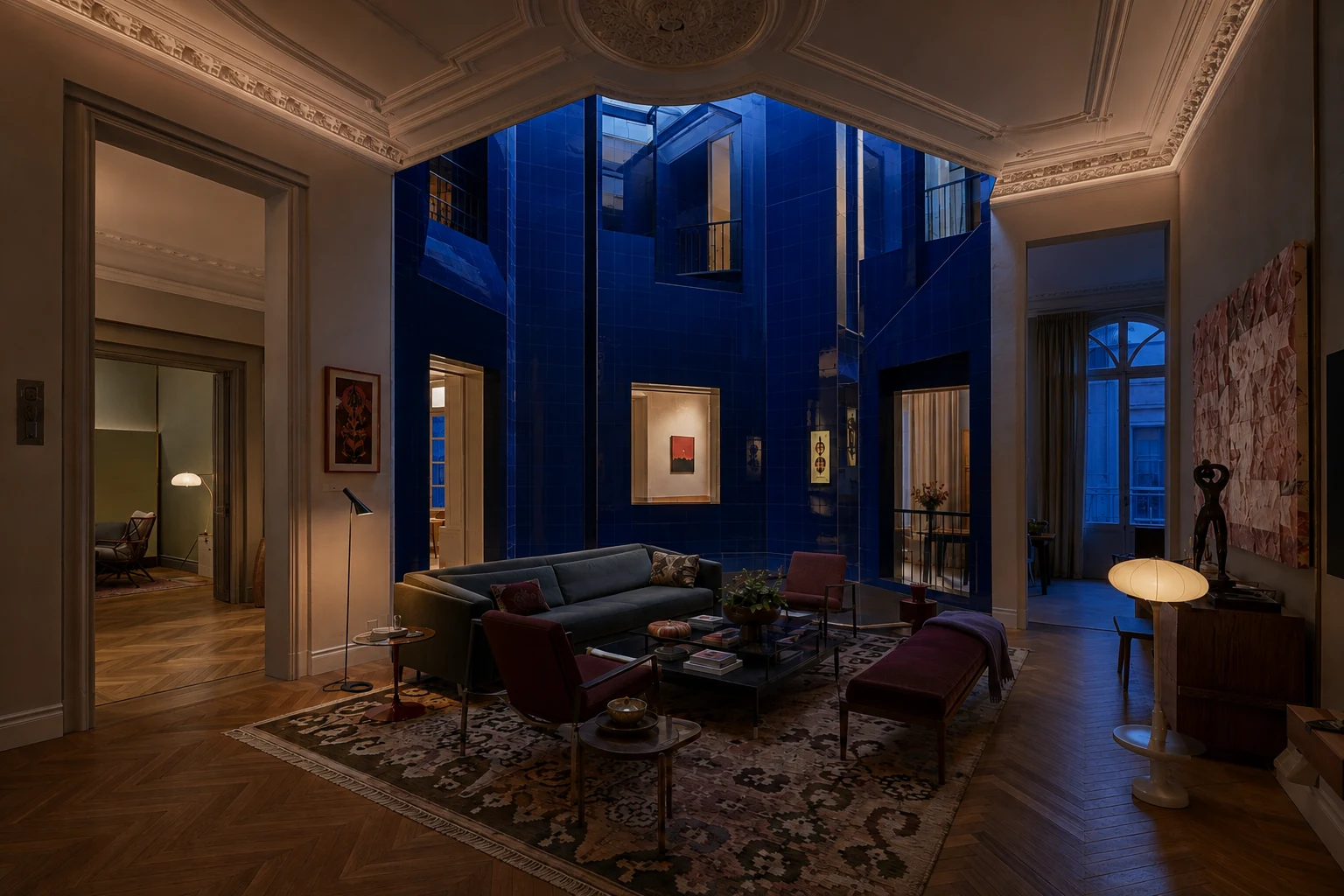
Daylight enters from above
and meets cobalt.
Reflected colour moves beyond the court, cooling pale plaster and altering the apparent depth of adjacent rooms. As the day changes, surfaces seem to advance or recede.
At blue hour, cobalt deepens while the historical rooms become warmer. Integrated light and domestic lamps form smaller zones of occupation.
Light does not merely set an atmosphere. It reorganises spatial distance.
Colour measures the light.
05
Lived-In
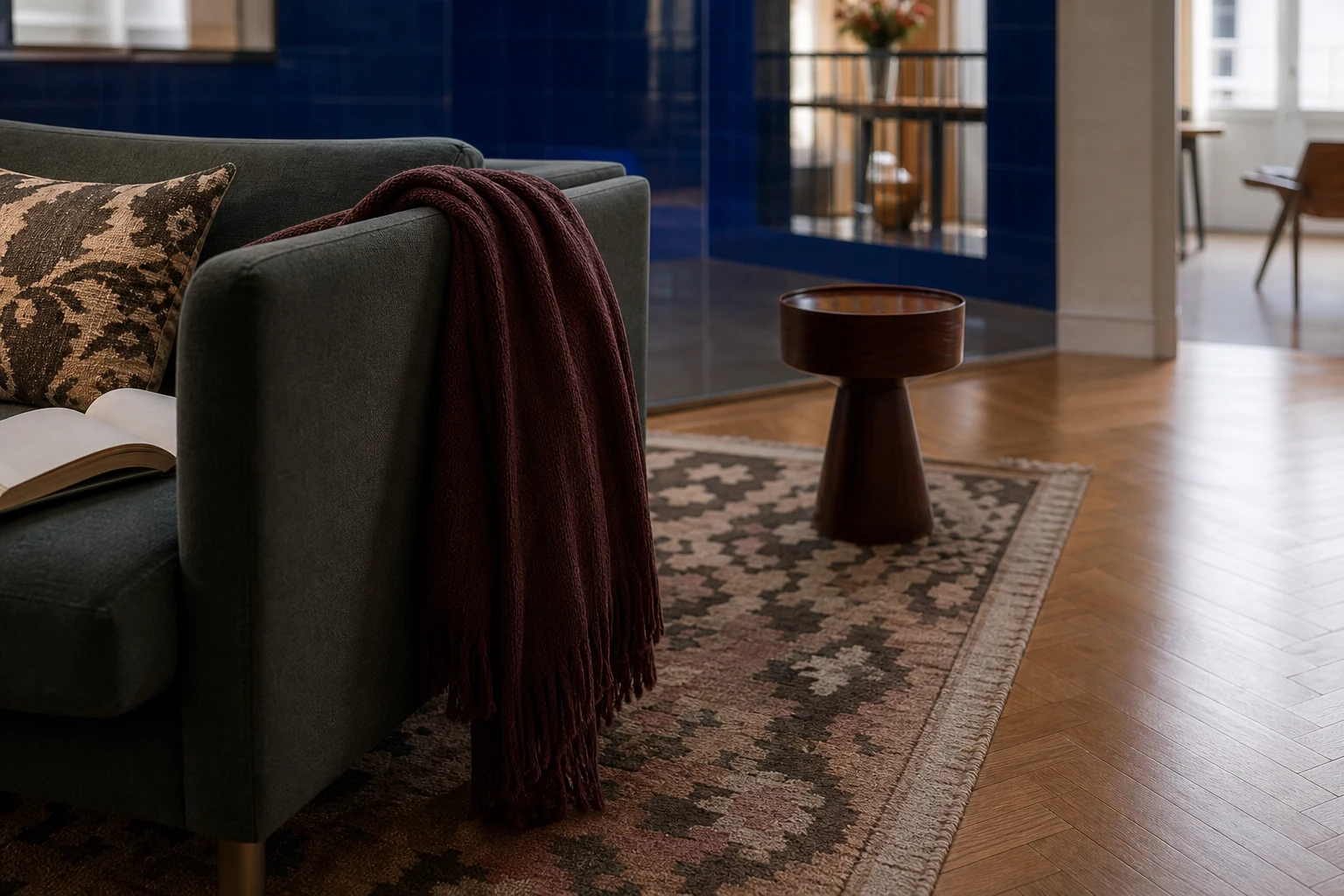
The story closes at the scale of touch.
An open book and a displaced textile register recent use without explaining the person who left them.
Upholstery, wool, timber and parquet hold different kinds of contact. Cobalt remains in depth as a quiet chromatic presence.
The room records occupation through small disturbances rather than display.