MÆTER Select 001
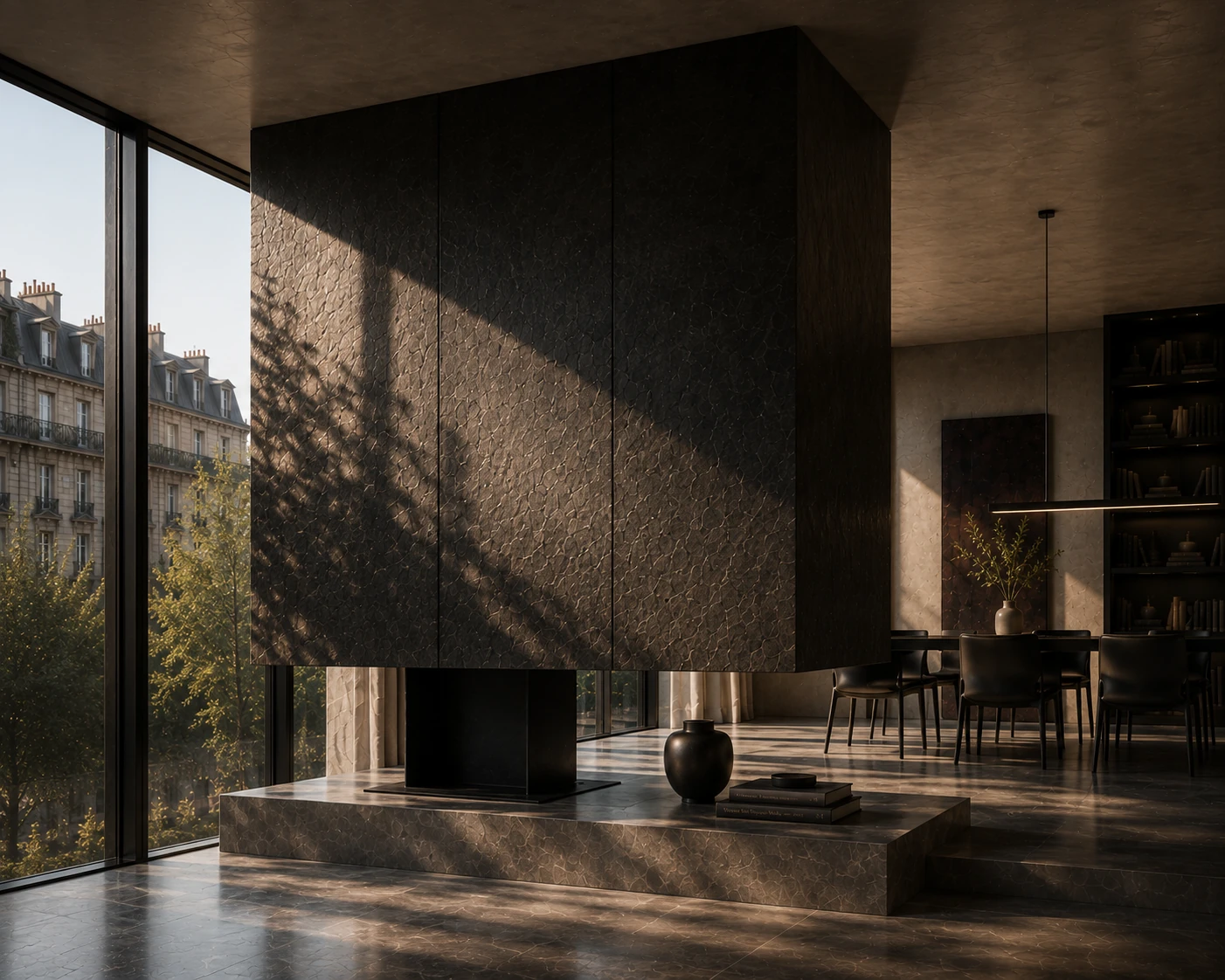
House of Suspended Mass
An interior shaped by weight, suspension and changing light.
House of Suspended Mass
An interior shaped by weight, suspension and changing light.
The room is organised around a single gesture: a dark mass suspended above the floor.
Its weight is apparent.
Its contact with the architecture is not.
The volume divides without closing, creating a threshold between living, dining and the more private depth of the house. Changes in level reinforce that separation without requiring walls.
What appears monumental from one position becomes a frame from another.
02
The Threshold
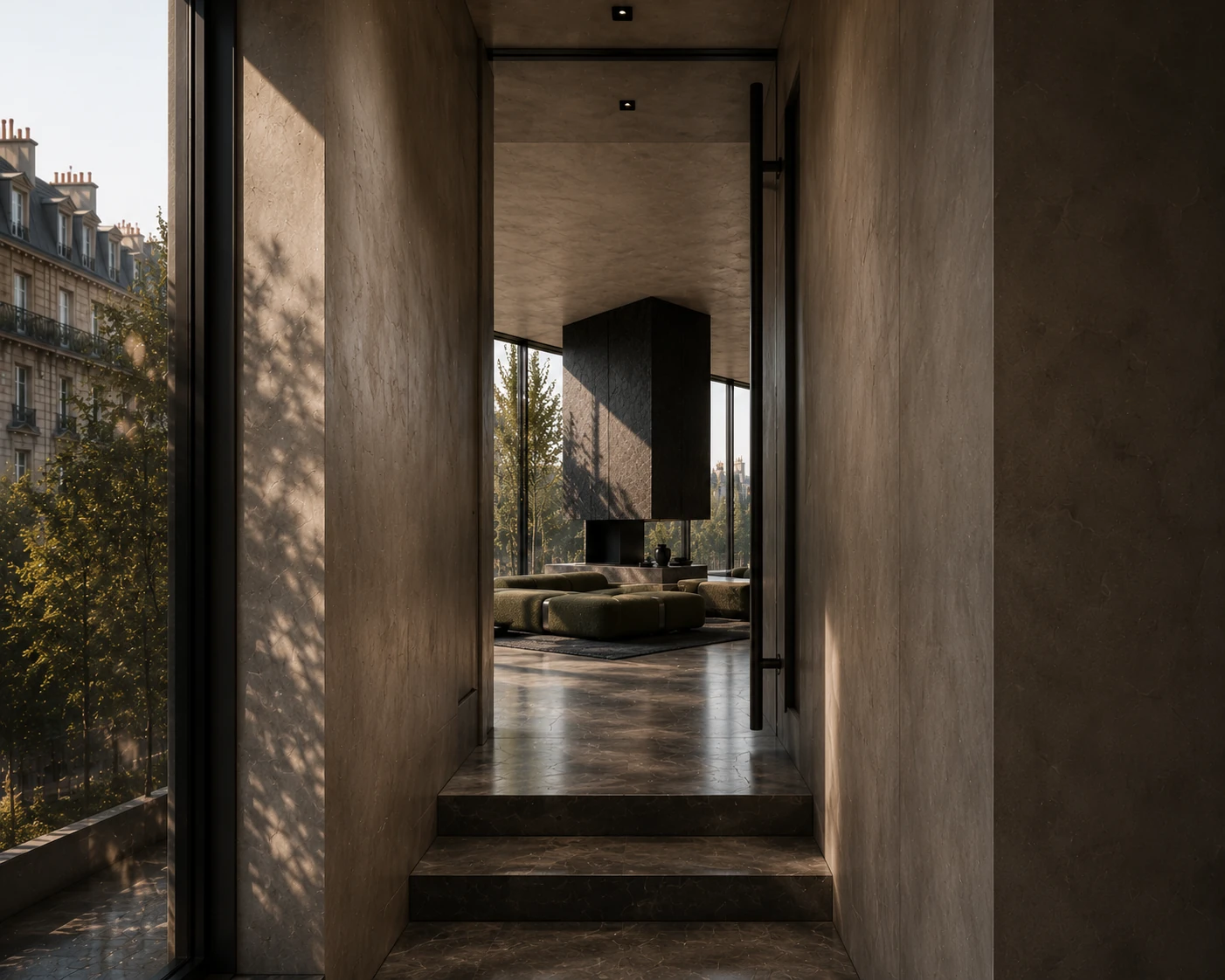
The suspended volume does not simply occupy the room. It controls how the room is discovered.
Architecture is never revealed at once.
Stone steps, changes in height and compressed passages slow movement before the space opens again towards the light.
Mass defines the void.
The void gives meaning to the mass.
03
The Living Room
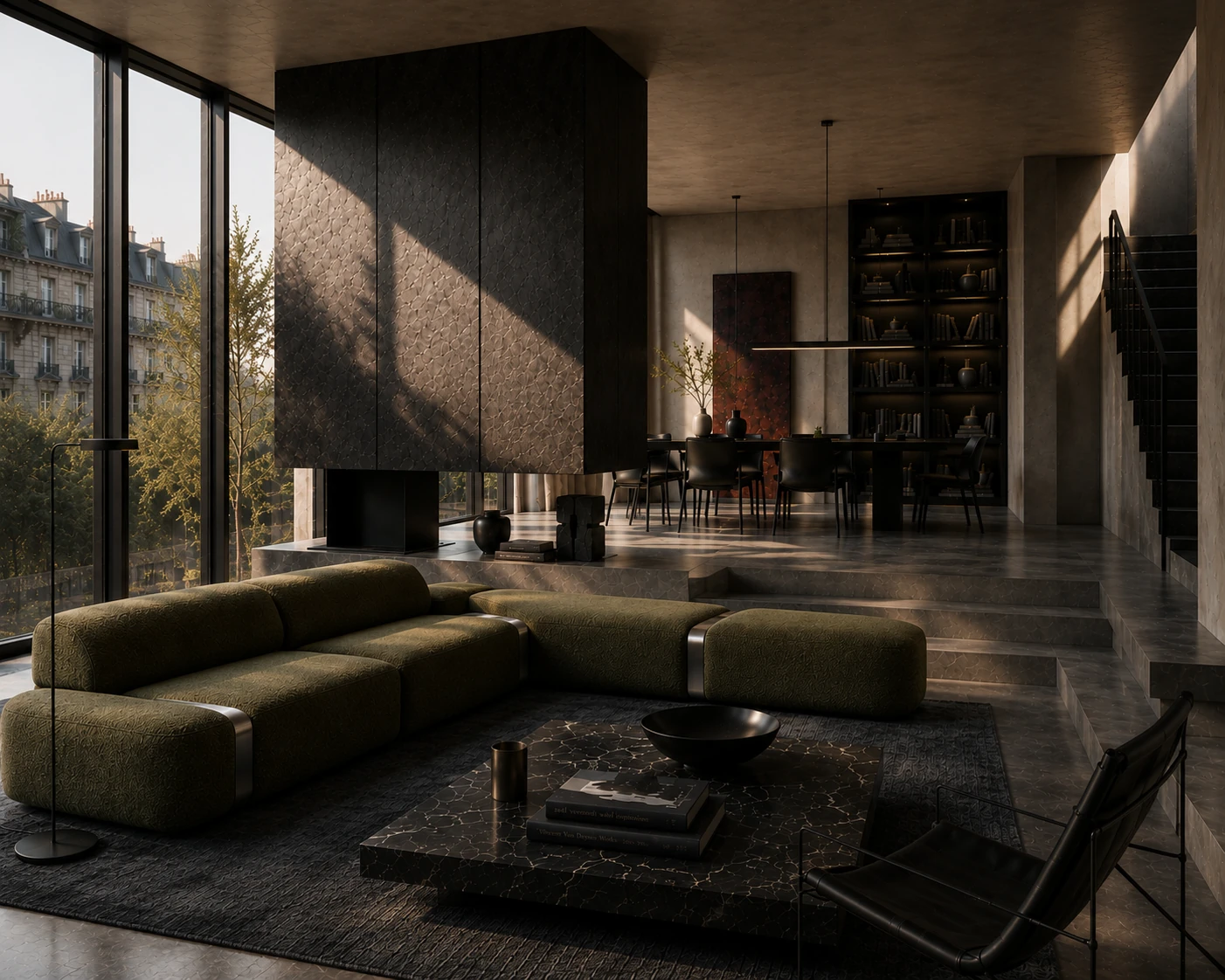
Against the permanence of stone and the severity of the suspended volume, the living area introduces something softer and explicitly domestic.
Low furniture preserves the horizontal field of the room. Objects remain few. Nothing is asked to compete with the architecture.
The olive upholstery introduces colour without becoming decoration — a muted presence between stone, charcoal, metal and daylight.
04
Light / Time
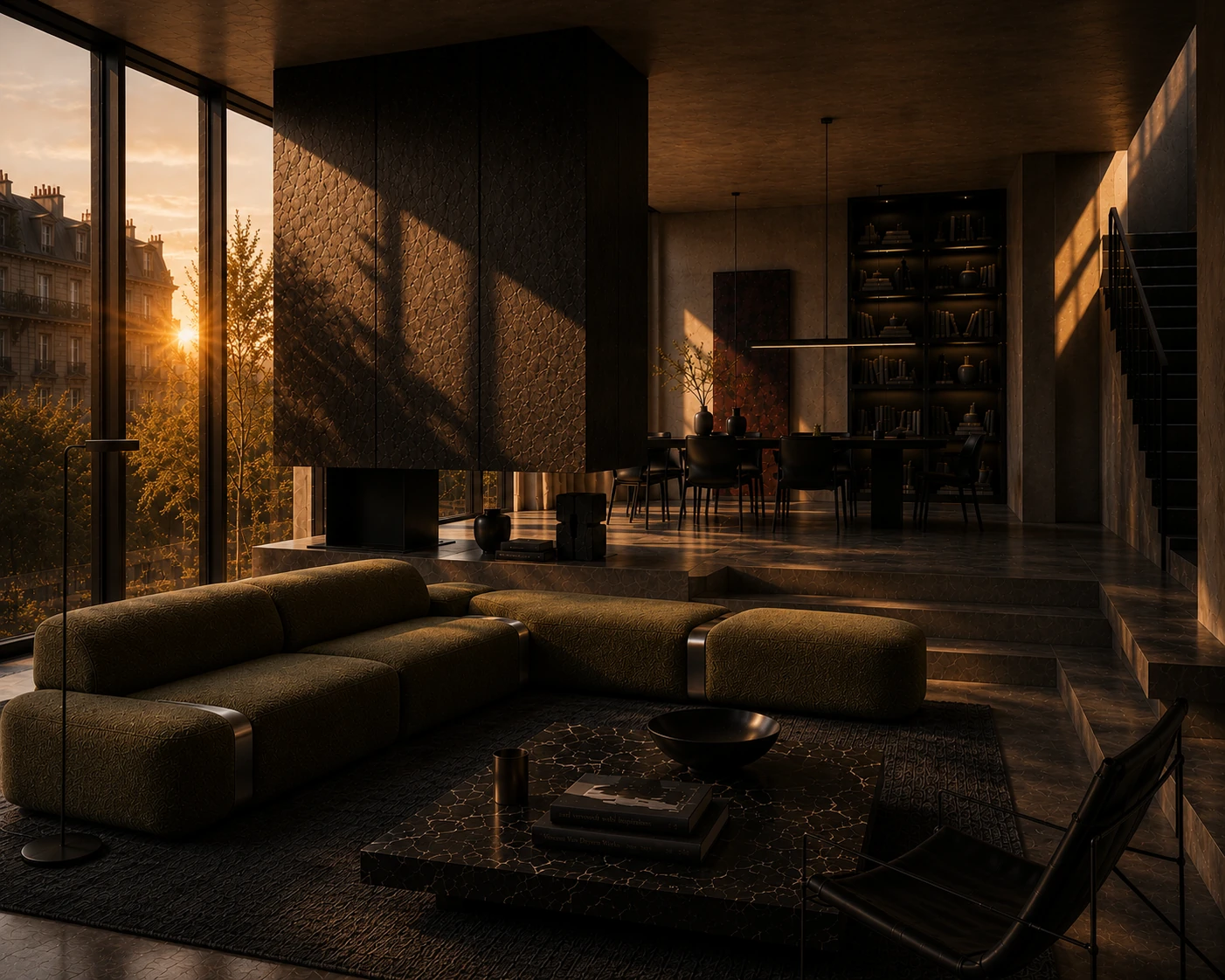
Light is not applied to the architecture.
It changes it.
As the sun moves, shadows from the vegetation outside travel across the suspended mass, the floor and the furniture. Surfaces that appear almost absolute at one moment become unstable at another.
The architecture remains.
Its expression does not.
Time becomes material.
05
Lived-In
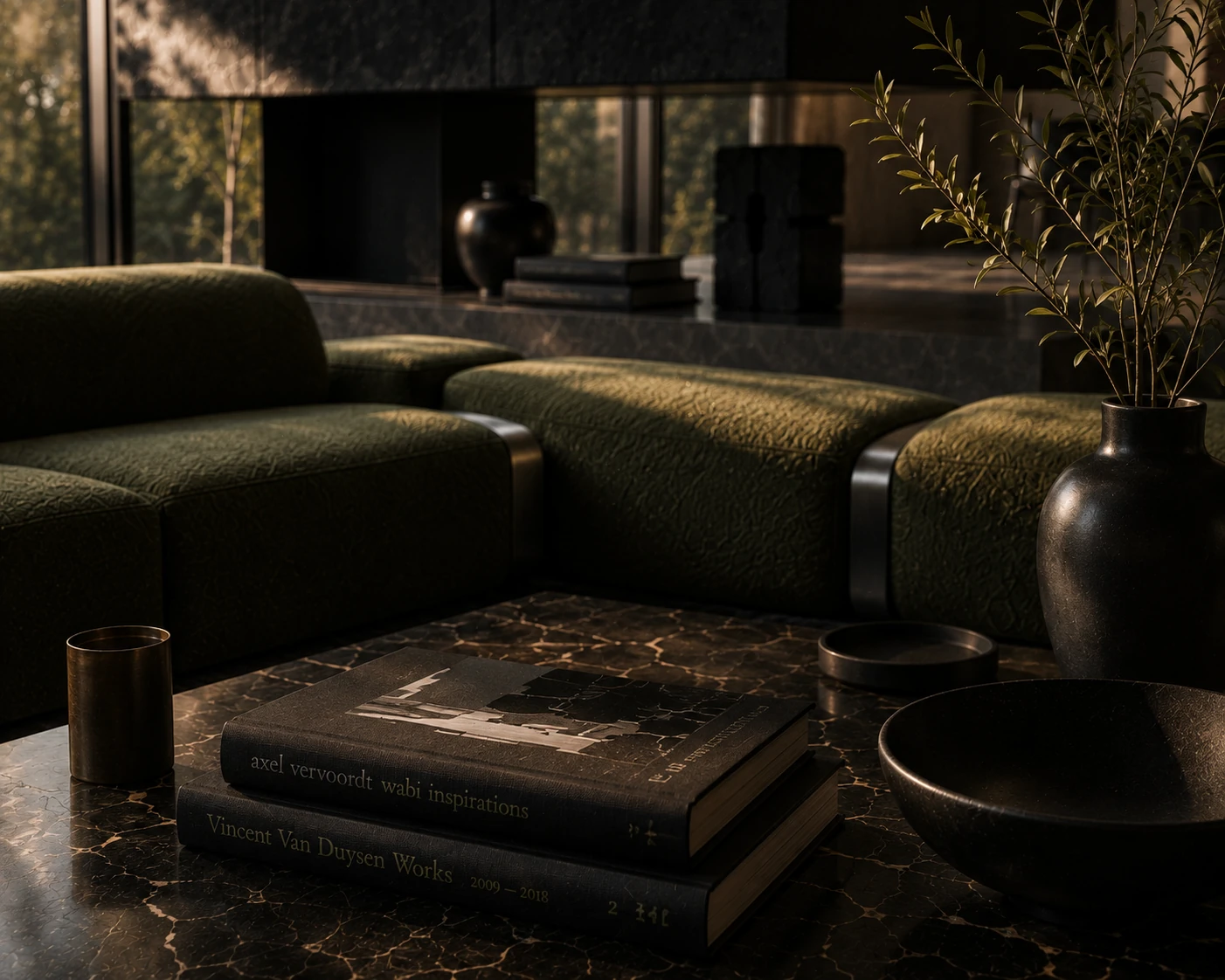
A house becomes credible through traces rather than staging.
A book left open.
A cup.
Objects moved from their intended position.
The surface of a fabric after someone has used it.
Human presence does not require a person in the frame.
It requires evidence that the space has been inhabited.
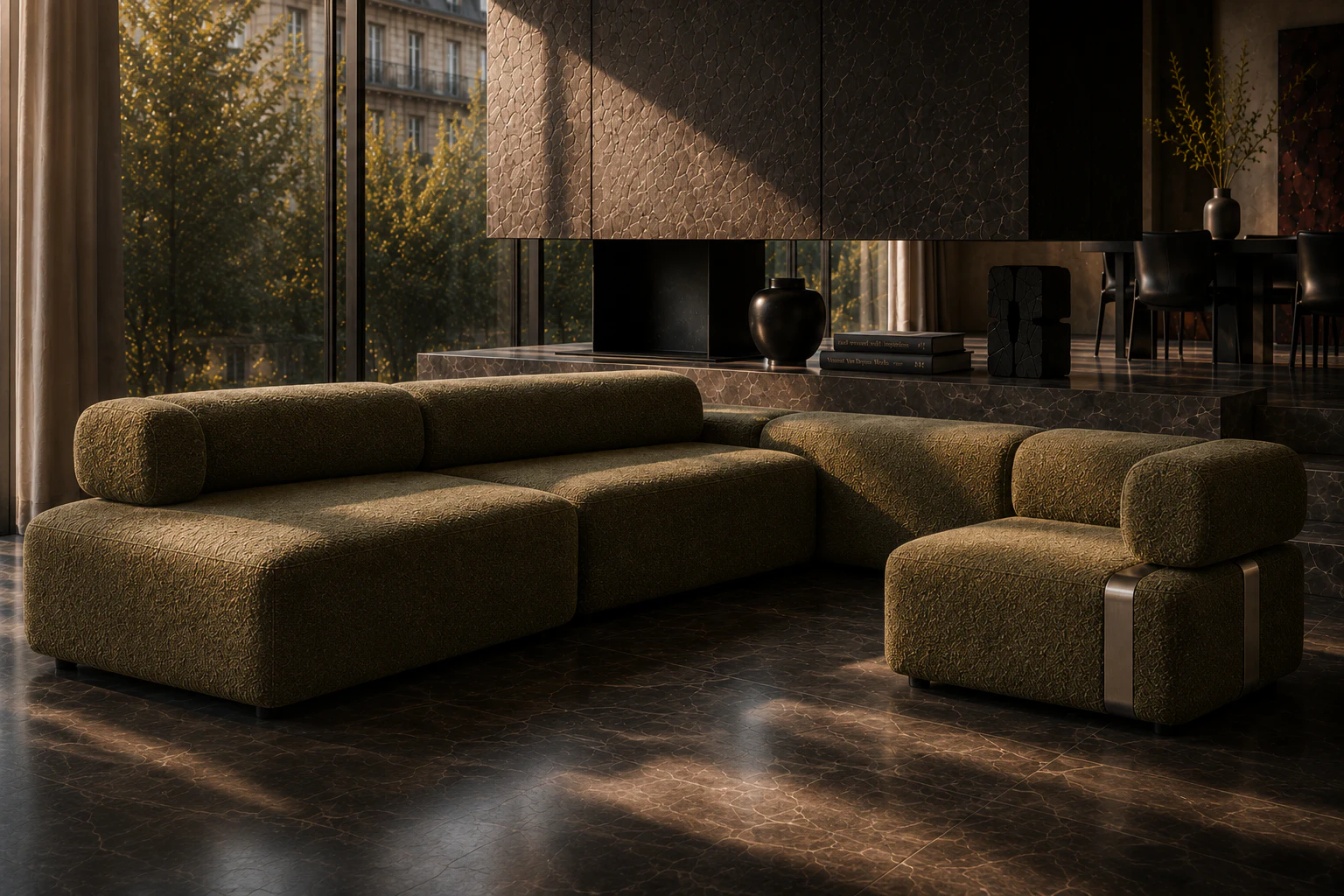
MÆTER Selected Object
001
Anton
Westwing Collection
Modular sofa · Olive green bouclé
Why MÆTER selected it
Anton was selected for its relationship with the architecture rather than as an isolated object.
Its low horizontal profile works against the vertical weight of the suspended volume. The softness of the bouclé introduces tactility into an otherwise mineral composition, while the brushed-metal elements add a precise interruption to the upholstered geometry.
Most importantly, its modular construction allows the sofa to behave less as an object placed in the room and more as a field within it.
It does not challenge the architectural gesture.
It gives the gesture somewhere to land.Explore Anton at Westwing
MÆTER may receive a commission from selected external links. Editorial selection remains independent of commercial relationships.