MÆTER Select 004
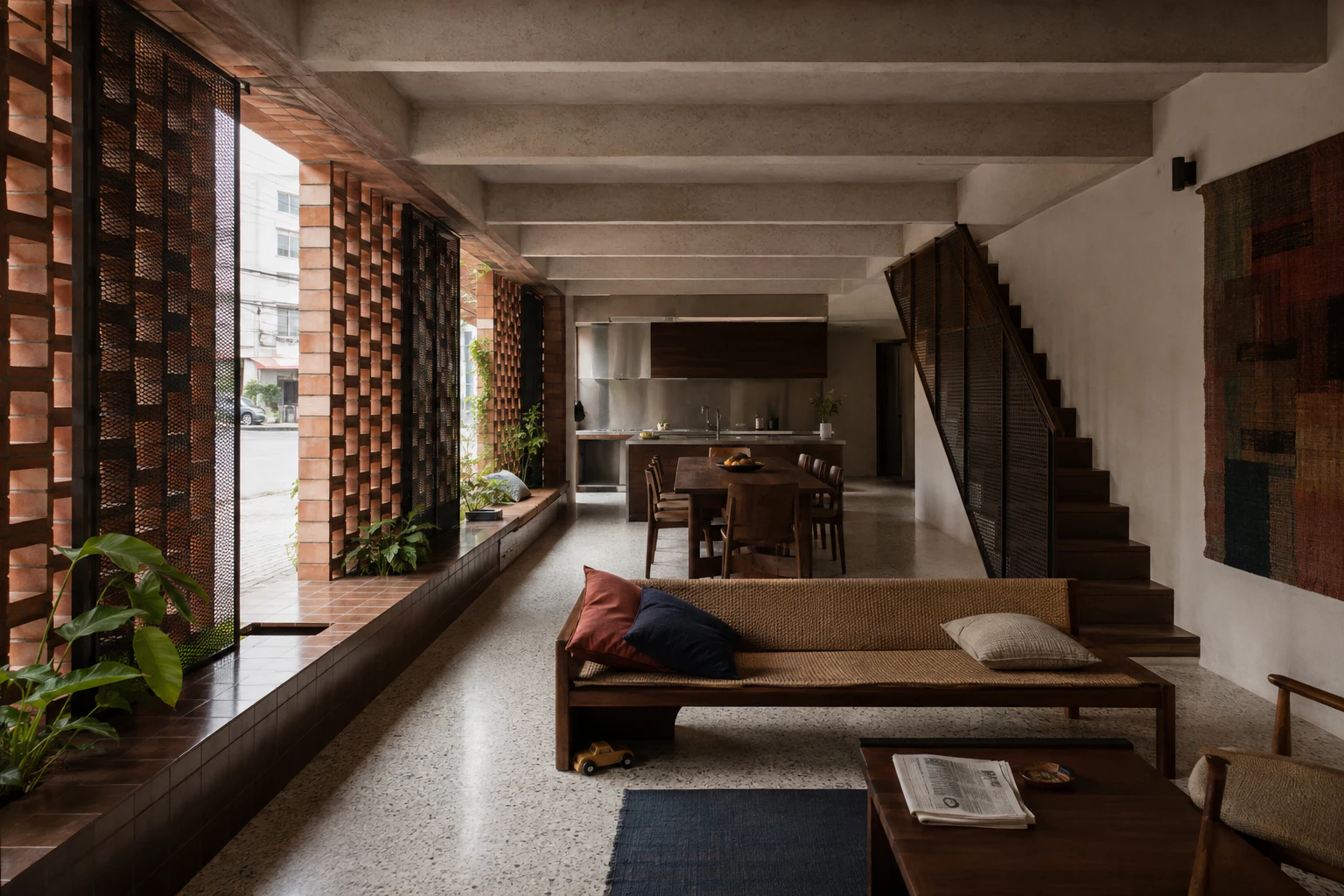
House of the Porous Edge
A multigenerational urban house organised through an inhabited climatic edge.
The edge becomes space
The boundary between city and home is given depth.
Along a dense, hot-humid street, terracotta masonry, operable bronze mesh, tiled ledges and planted recesses form a single environmental section.
This inhabited depth moderates exposure without severing domestic life from weather or neighbourhood. Shade, ventilation, privacy, rain protection and occupation are held by the same architectural gesture.
The façade is not a surface applied to the house. It is the first room.
02
The Rain Edge
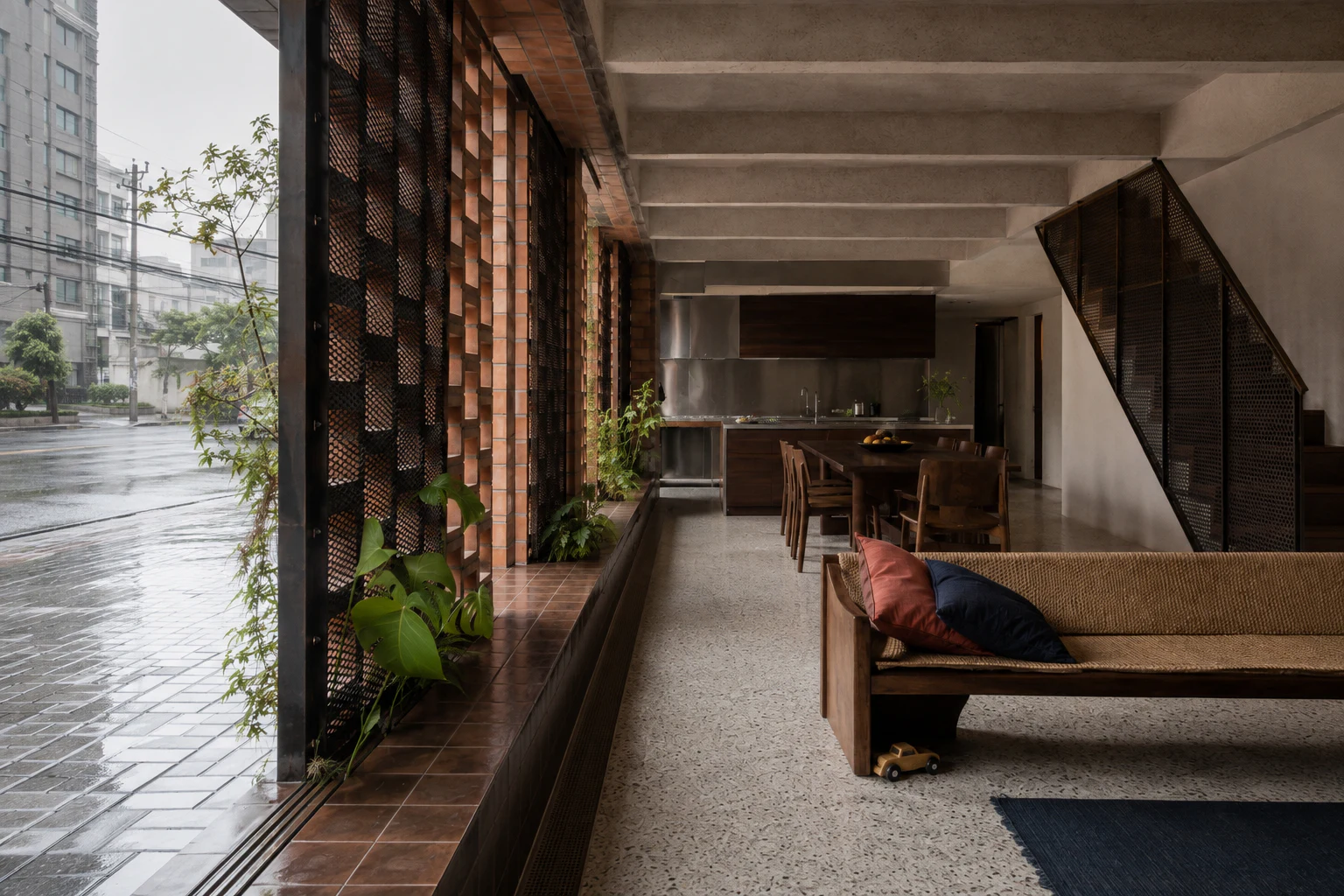
Arrival takes place through weather rather than behind a sealed boundary.
Rain darkens the clay and cools the outer ledge. Beyond it, perforated masonry and operable mesh regulate visibility and air before the terrazzo floor reaches the common room.
The passage from street to interior is gradual: each layer changes the degree of shelter without ending visual exchange.
The threshold is measured in degrees of shelter.
03
The Common Room
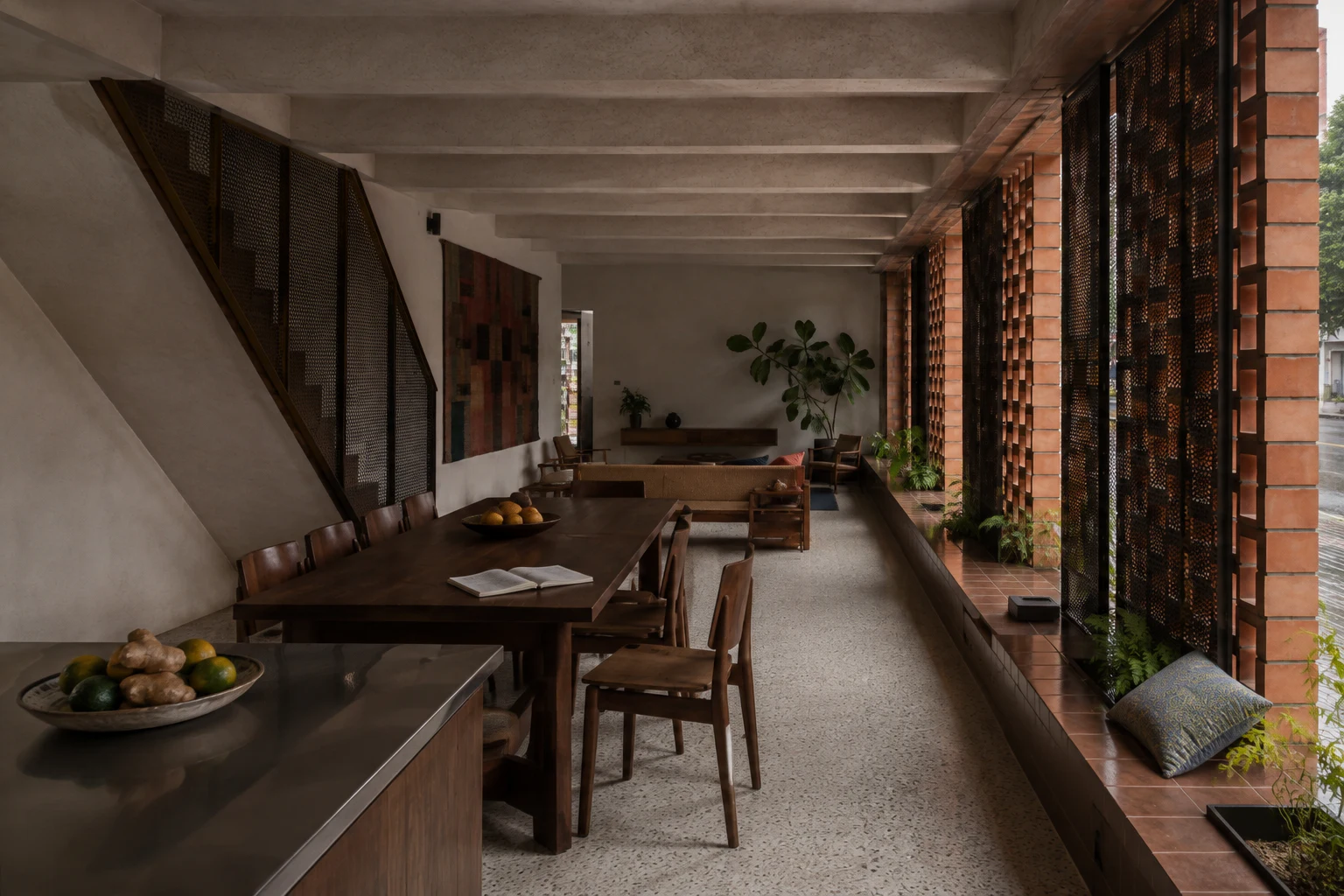
The common room is conceived as one continuous domestic field rather than a sequence of conventionally separated rooms.
Cooking, eating, reading, conversation and informal work share the same depth. The long table and low seating establish places of use while leaving movement between generations open.
Timber, cane and linen bring tactility at the scale of the body. Concrete and terrazzo maintain continuity; stainless steel gives the working core the directness required by daily use.
04
Light / Time
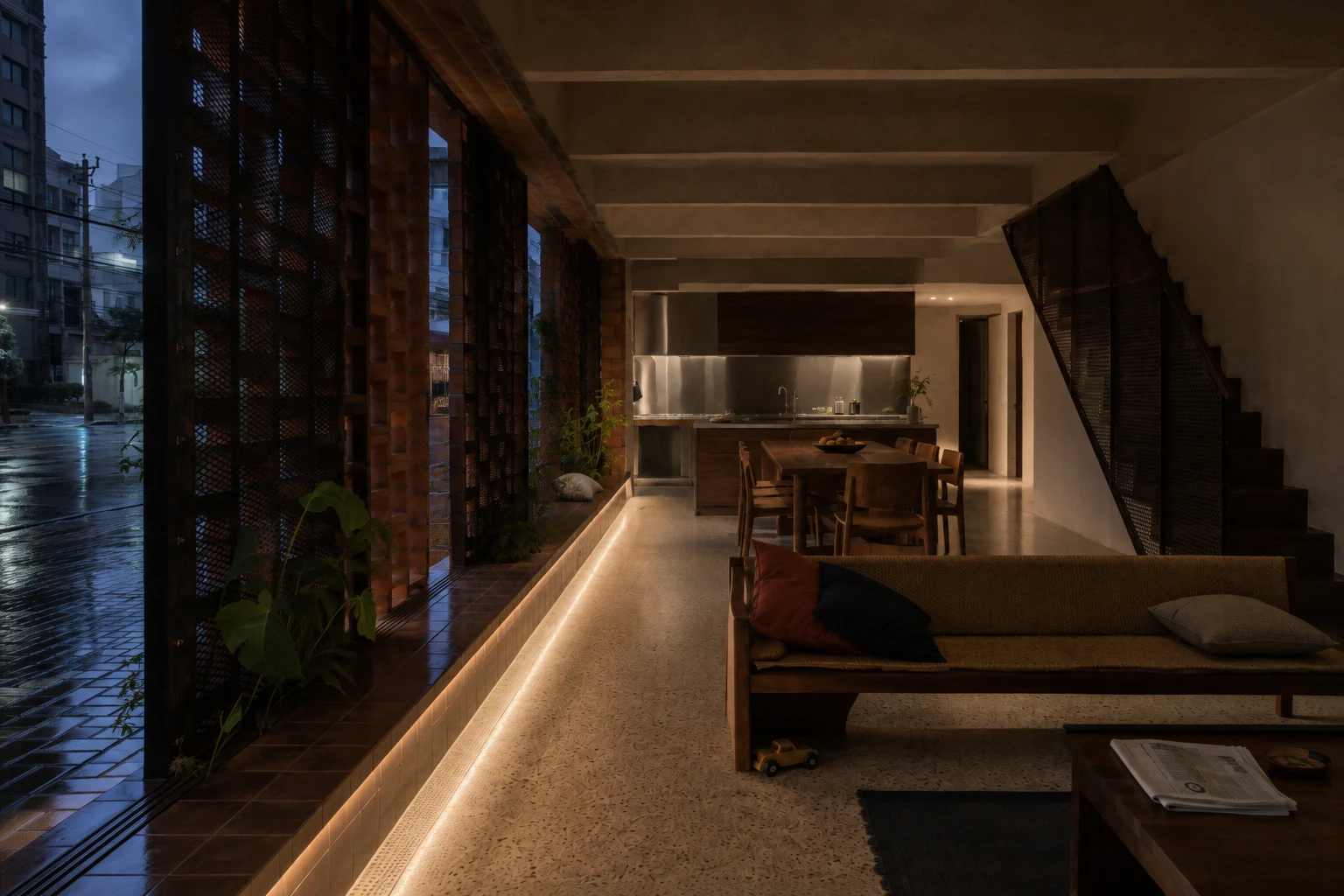
Pearl-grey daylight enters
without spectacle.
Terracotta and mesh break the diffuse sky into a softer, deeper field. Wet exterior surfaces hold cool reflection while clay returns a restrained warmth towards the room.
After rain, the street recedes and the edge darkens. Limited integrated light reveals the depth of ledges, screens and recesses; warmer zones of occupation form behind them.
Light makes the environmental section legible over time.
After rain,
depth becomes light.
05
After the Rain
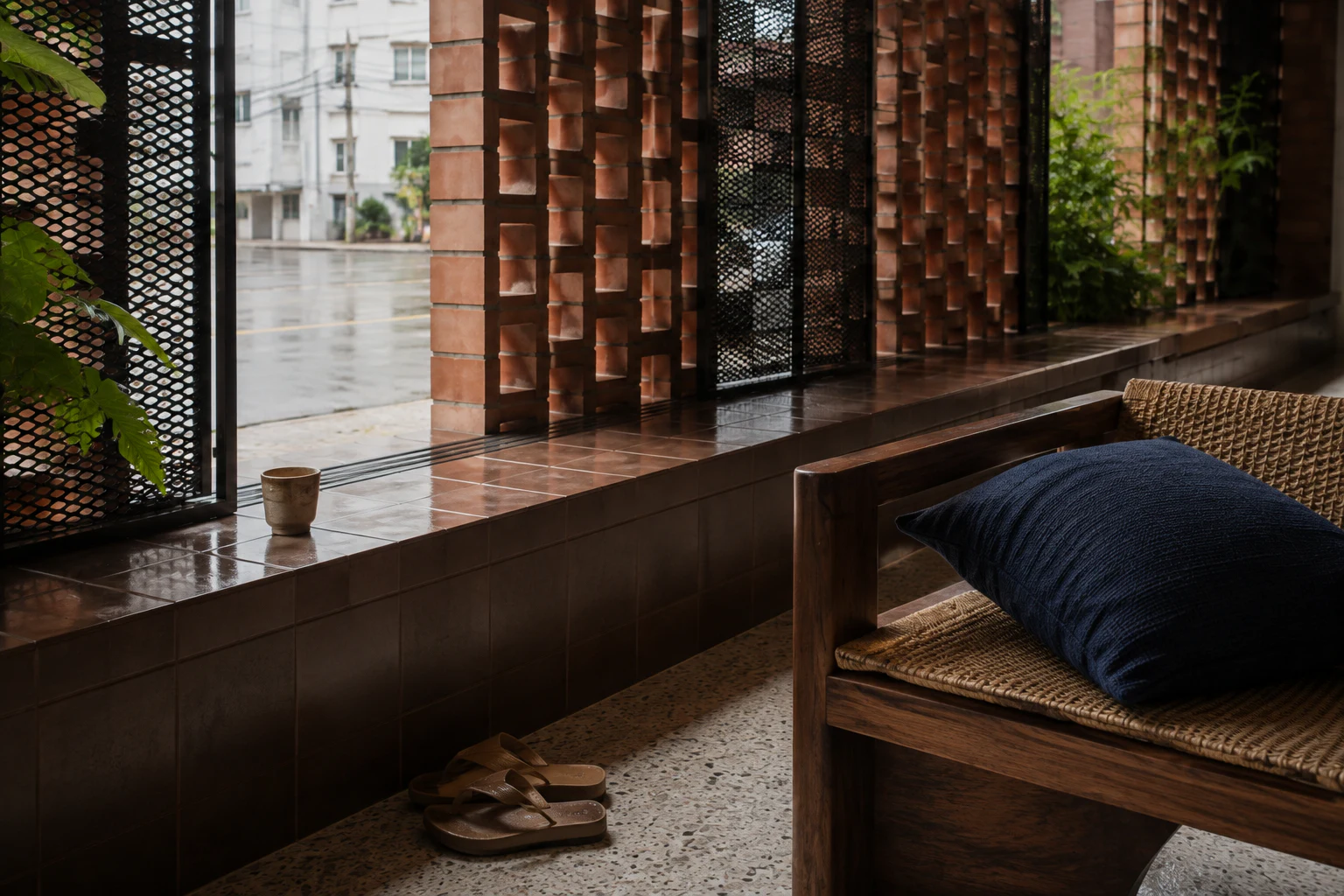
The story closes where body, material and weather meet.
A cup remains on the ledge. Rain sandals have been left just inside the dry threshold. Cane, timber and indigo textile hold the softer marks of contact.
These small disturbances do not narrate a family. They register a house in use.
The street remains present through moisture, light and air.