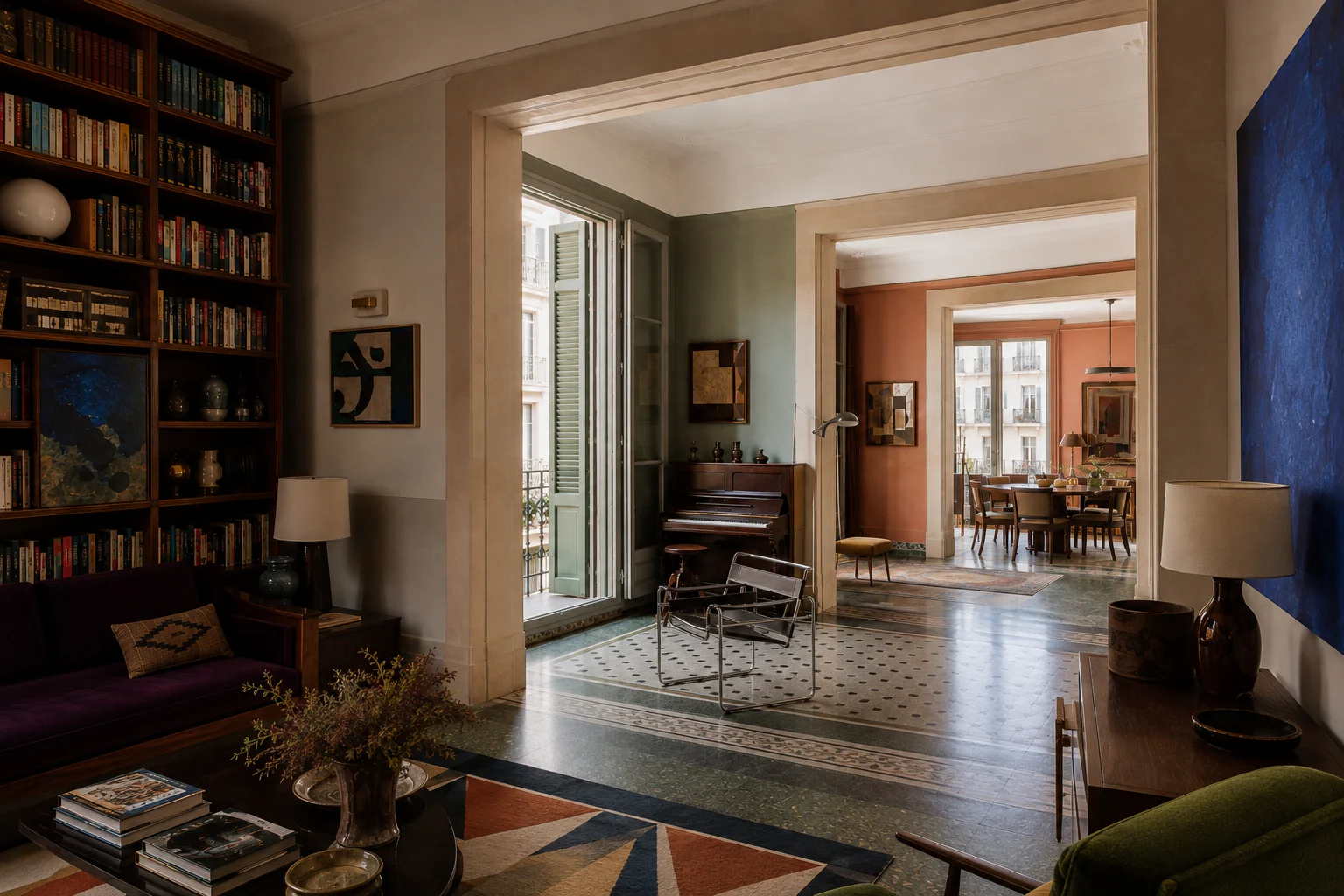
MÆTER Select 005
House of the Oblique Rooms
A renovated Alexandrian apartment ordered by a sequence of laterally displaced rooms.
Order through displacement
The inherited apartment is reorganised without making its rooms alike.
Within the 1930s shell, deep limestone portals are set laterally out of line. The original expectation of a central axis remains present, but no longer determines movement.
Each threshold preserves a view into the next room while withholding its complete form. Direction changes; visual continuity remains.
The enfilade is no longer a view through rooms. It is a route that turns while remaining continuous.
02
The Offset
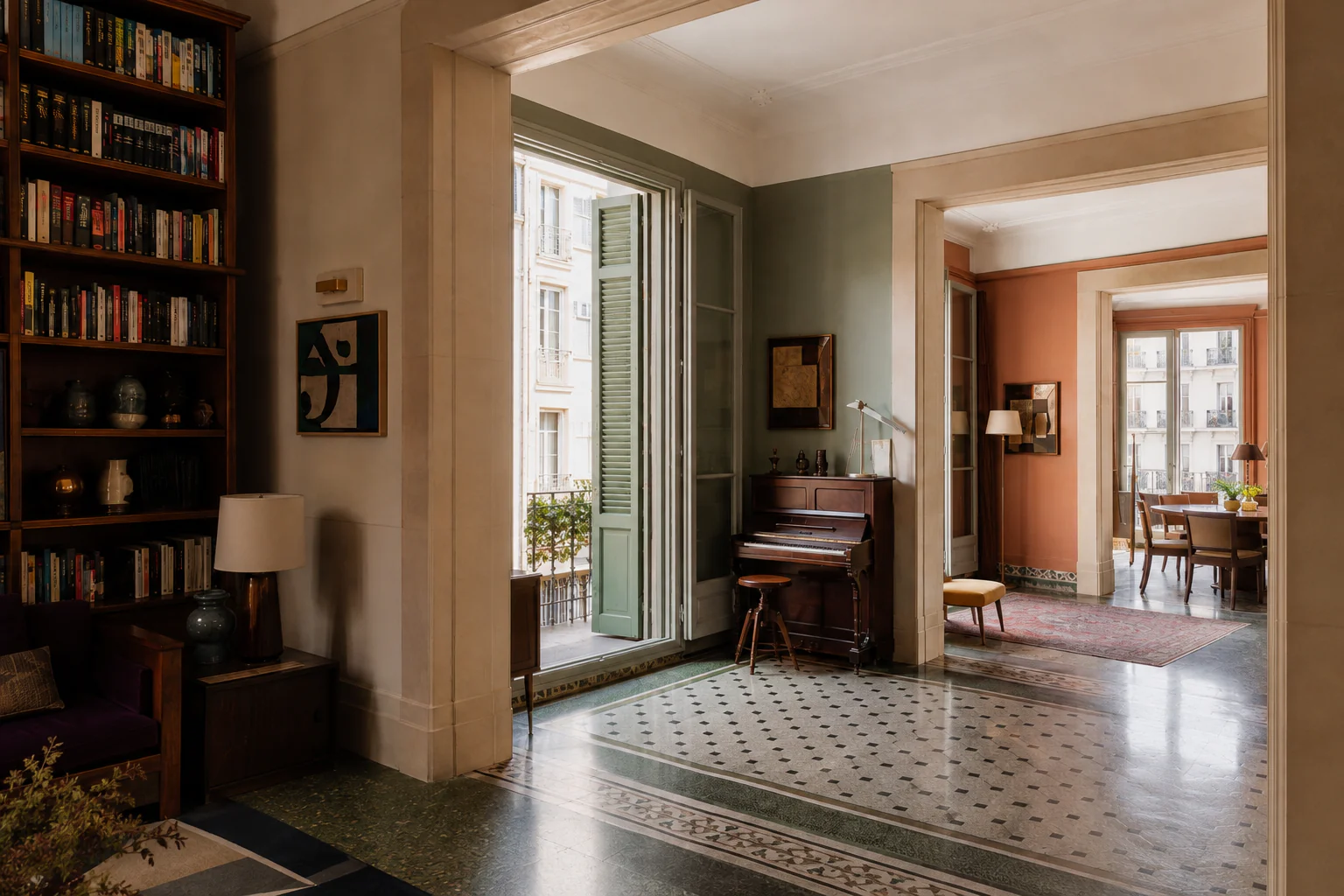
The first opening does not resolve the apartment in a single glance.
Its limestone depth frames one portion of the celadon room. The next portal shifts again, allowing the apricot dining room to appear across the edge of the view rather than at its centre.
Terrazzo fields register each displacement underfoot. Threshold, floor and changing direction operate as one spatial order.
Continuity is maintained through displacement.
03
The Collected Room
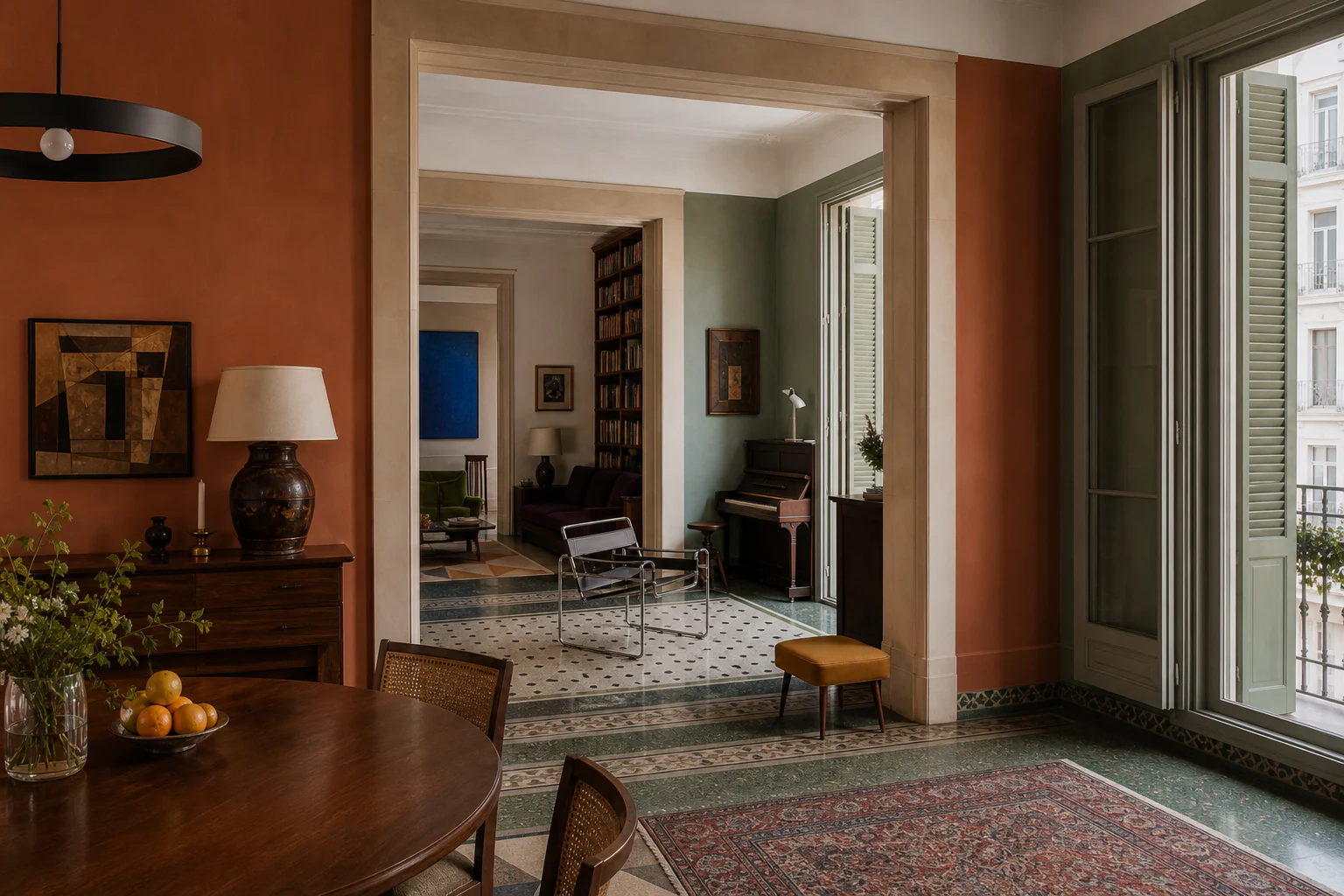
The apartment allows its rooms to remain distinct. The library gathers books and upholstered depth; the music room holds a quieter mineral field; the dining room turns towards shared use and warmer street light.
Different periods and visual languages meet without being brought into stylistic agreement. Dark timber, aubergine velvet, a chromed-steel chair, patterned rugs and a cool blue work retain their own identities.
Architecture supplies coherence through position rather than resemblance. Each object takes its place in relation to an opening, a route or a pause within the sequence.
04
Cross-Light
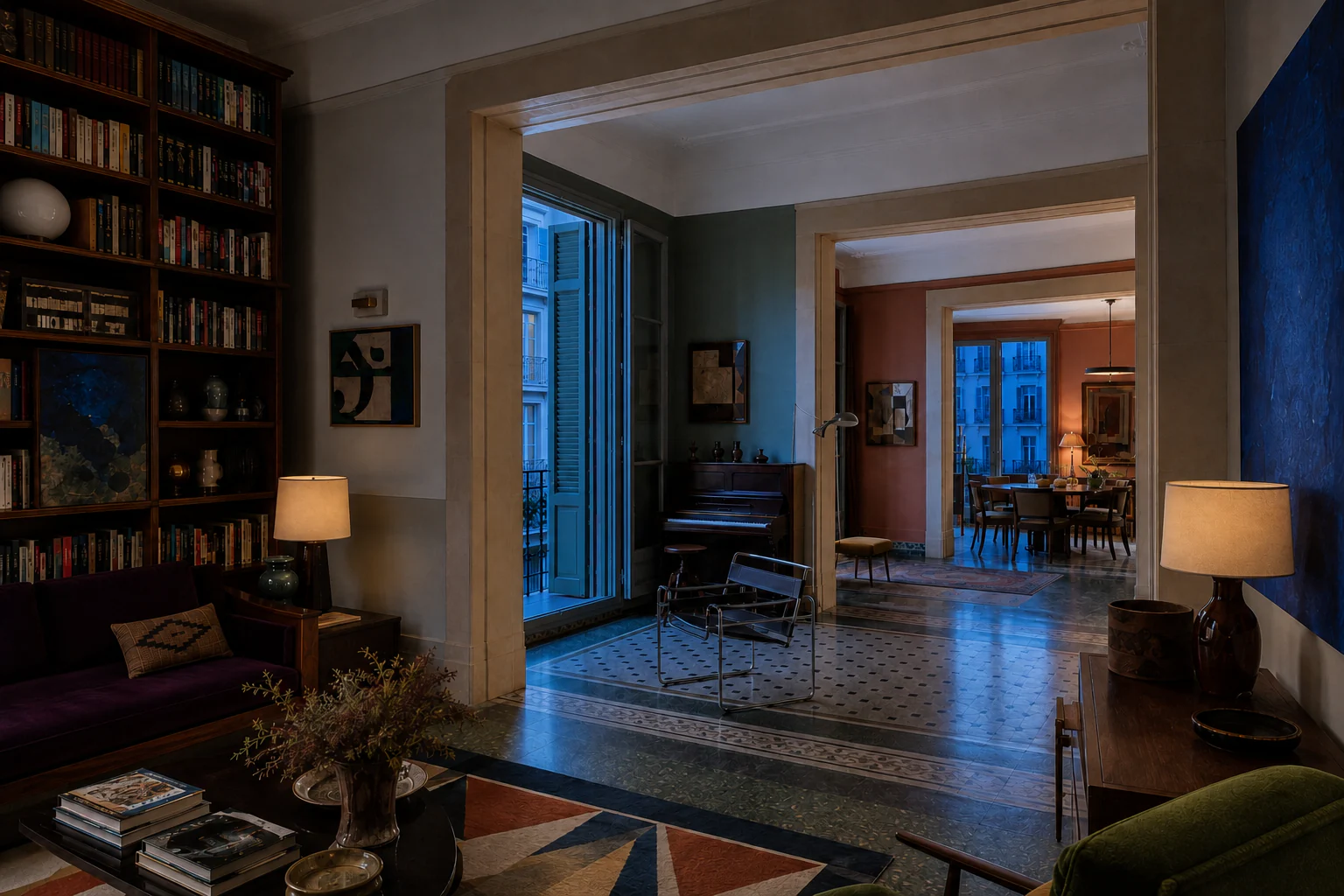
Two orientations
remain present.
Warmer daylight enters from the street while cooler reflected light reaches the apartment from the internal court. The offset portals prevent either condition from becoming a single frontal effect.
Light crosses thresholds, changes temperature and settles differently in each room. Limestone reveals mark the transition; terrazzo carries it across the floor.
At blue hour, limited lamps hold separate places of occupation while the route remains legible between them.
Light crosses the rooms
before it settles in them.
05
Recent Use
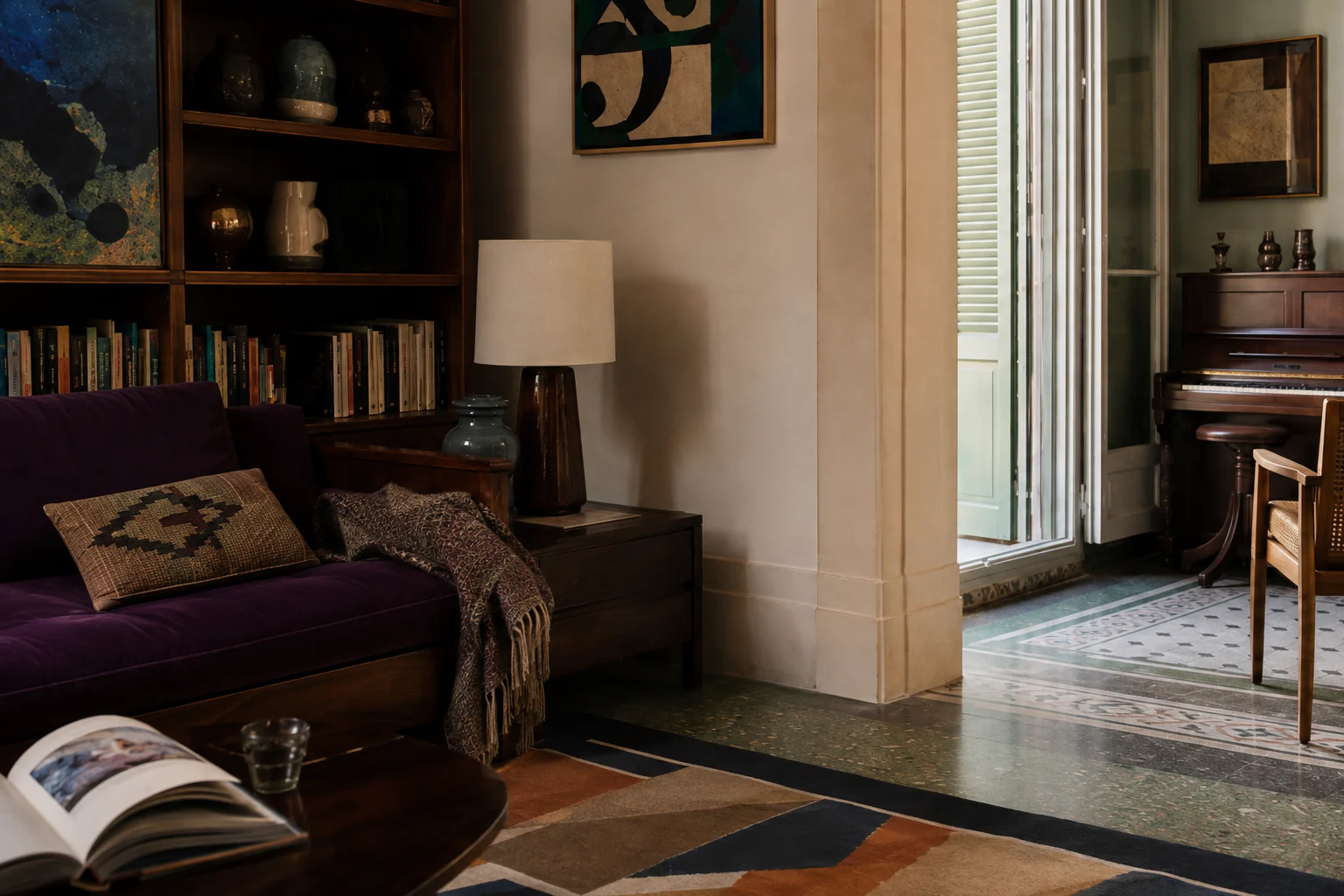
Occupation appears as interruption rather than display.
An open book, compressed velvet and a displaced textile register recent use. Timber, wool, terrazzo and limestone hold different scales of touch and duration.
The collected objects remain layers within the architecture. They do not replace its order.
The route continues beyond the frame.